Shop

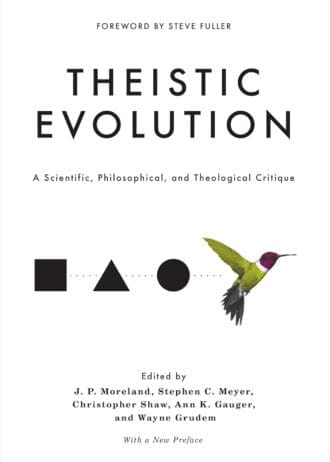
Theistic Evolution: A Scientific, Philosophical, and Theological Critique

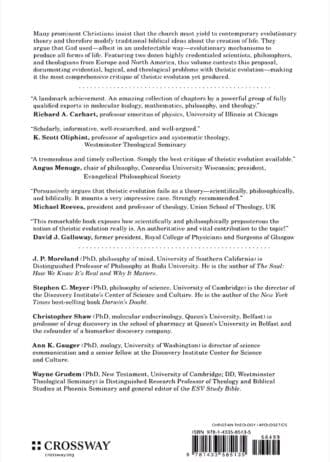
Many prominent Christians insist that the church must yield to contemporary evolutionary theory and therefore modify traditional biblical ideas about the creation of life. They argue that God used―albeit in an undetectable way―evolutionary mechanisms to produce all forms of life. Featuring two dozen highly credentialed scientists, philosophers, and theologians from Europe and North America, this volume contests this proposal, documenting evidential, logical, and theological problems with theistic evolution―making it the most comprehensive critique of theistic evolution yet produced.

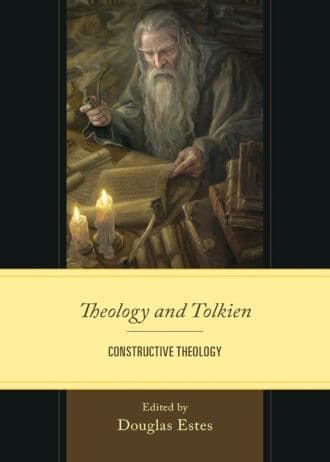
Theology and Tolkien: Constructive Theology

The Lord of the Rings and other works of J.R.R. Tolkien have had a far-reaching impact on culture in the late twentieth and early twenty-first centuries. In print and on film, Tolkien’s works seem to be incredible epics, but religious aspects are less obvious. Yet Tolkien himself stated in his letters that the chief conflicts of his epic works were “about God, and His sole right to divine Honour,” and whether Sauron can wrest and destroy all that is good in Middle-earth. It is from this that readers awaken to the theological truths that imbue Tolkien’s works. In Theology and Tolkien: Constructive Theology, an international group of scholars consider how Tolkien’s works (and Jackson’s interpretations) can help us build better theologies for use in our world today. From essays on the music of creation in the Ainulindalë, to angels, demons, and Balrogs, to Tolkien’s theology of God, providence, evil, and love, to the eschatology of the Final Chord of the Great Music, this book invites the reader to journey through Middle-earth as the contributors engage the theology of Tolkien’s works and its impact on the world.

Biola University Contributor:
Charlie Trimm – “Gandalf, Sauron, Melian, and the Balrogs as Angels? A Study of J.R.R. Tolkien’s Maiar in the Context of Biblical Angelology”

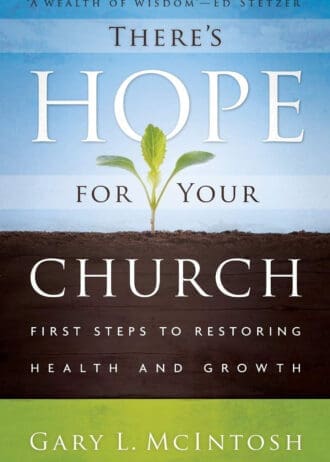
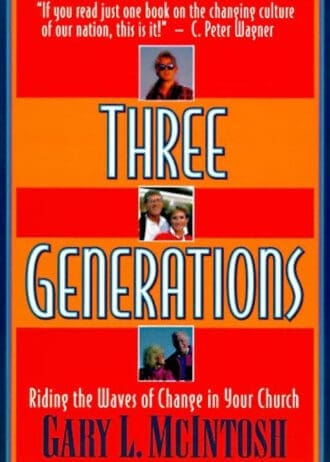
There’s Hope for Your Church: First Steps to Restoring Health and Growth

A startling 85% of churches in the US are plateaued or declining, a trend that has been building for the past fifty years. In the face of shrinking attendance and lagging spiritual growth, pastors and church leaders are understandably discouraged and demoralized. But the first step to turning things around is hope. Church health expert Gary McIntosh offers this hope by showing church leaders the first things they need to do to make a new start for their church. God can and does restore churches to new life, even as he restores individuals. The street-smart ideas and step-by-step instructions found in this book are ones that pastors and church leaders can put to use immediately in their churches to bring about solid growth and renewed hope for the future.

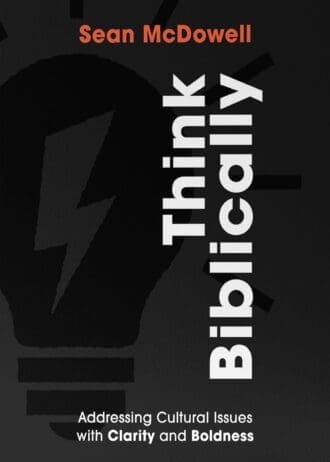
Think Biblically, Teen Bible Study Book

Sean McDowell’s six-session Bible study walks students through a Christian ethic for a new generation. Developed for teenage guys to discover how to discern biblical truth, real justice, and God’s love amid the noise of today’s world. Teens learn how to listen and engage in healthy dialogue when it comes to issues like race, poverty, homosexuality, immigration, social media, and politics.

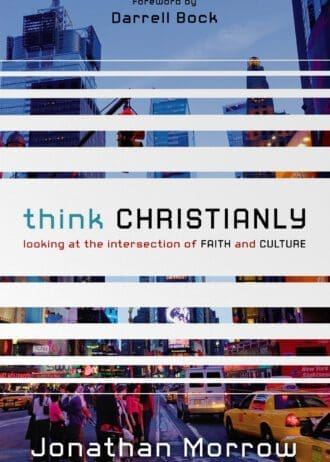
Think Christianly: Looking at the Intersection of Faith and Culture

Think Christianly is about seizing the opportunities we have every day to speak the life Jesus offers into our culture. Tragically, many such opportunities pass us by unclaimed—either because we don’t notice them or we have not prepared ourselves to enter into them. And those around us seem to grow increasingly unwilling to hear anything the church has to say. Jonathan Morrow helps church leaders envision and implement ways for their congregations to “think Christianly” about contemporary questions and to speak in informed, engaging ways.

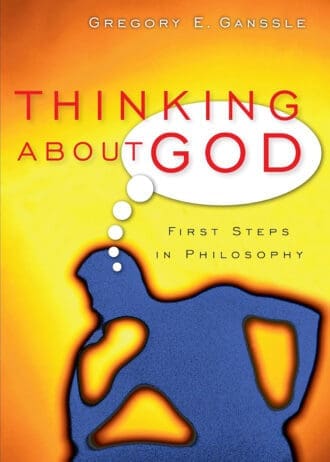
Thinking About God: First Steps in Philosophy

Can we really think about God? Can we prove God’s existence? What about faith? Are there good reasons to believe in the Christian God? Can we avoid thinking about God? The real problem, says philosopher Gregory E. Ganssle, is not whether we can think about God, but whether we will think well or poorly about God. In the first part of this book Ganssle lays the groundwork for clear and careful thinking, providing us an introductory guide to doing philosophy. In the second part Ganssle then takes us through the process of thinking well about God in particular. In the final part Ganssle helps us thread our way through questions like: What is God like? What can God do? What can God know? How does God communicate? If you’re looking for your first book for thinking clearly and carefully about God, then you’ll appreciate the good thinking found in this book.

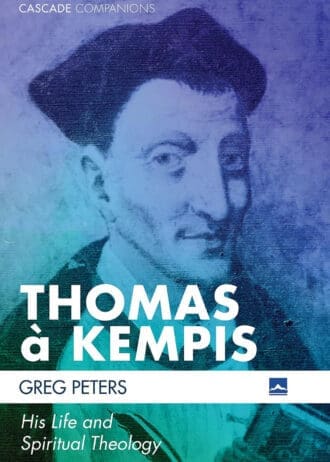
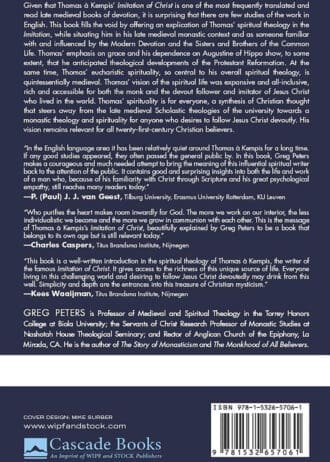
Thomas a Kempis: His Life and Spiritual Theology

Given that Thomas à Kempis’ Imitation of Christ is one of the most frequently translated and read late medieval books of devotion, it is surprising that there are few studies of the work in English. This book fills the void by offering an explication of Thomas’ spiritual theology in the Imitation, while situating him in his late medieval monastic context and as someone familiar with and influenced by the Modern Devotion and the Sisters and Brothers of the Common Life. Thomas’ emphasis on grace and his dependence on Augustine of Hippo show, to some extent, that he anticipated theological developments of the Protestant Reformation.

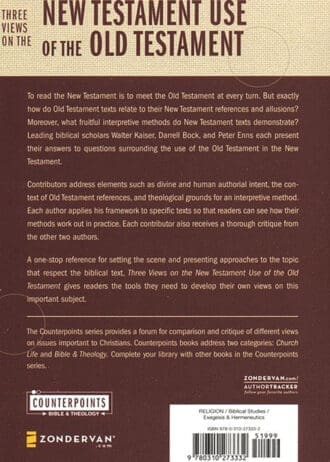
Three Views on the New Testament Use of the Old Testament

Is sensus plenior an appropriate way of explaining the New Testament use of the Old Testament? Do NT writers take into account the context of the passages they cite? Should modern scholars model their exegesis after the apostles’? Following the classic presentation-critique-response format, three scholars discuss questions relating to the literary relationship between the two Testaments.

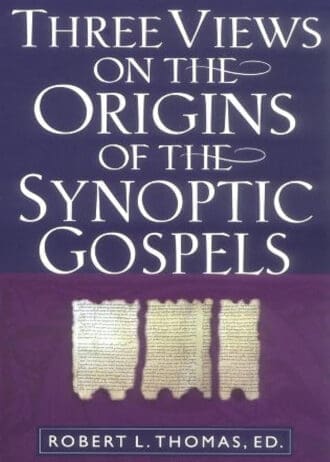
Three Views on the Origins of the Synoptic Gospels

While secular critics and liberal religious scholars have discounted the historicity and integrity of the first three Gospels, evangelicals maintain that the Synoptic Gospels fully support a high view of inspiration and historicity, despite varying views among evangelicals on Gospel origins. Four evangelical scholars join together in a presentation/response format to examine the three dominant views on Gospel origins. Grant Osborne and Matthew Williams present the Two-Source or Markian Priority View; John H. Niemelä presents the Two Gospel or Matthewan Priority View; and F. David Farnell presents the Independence View.

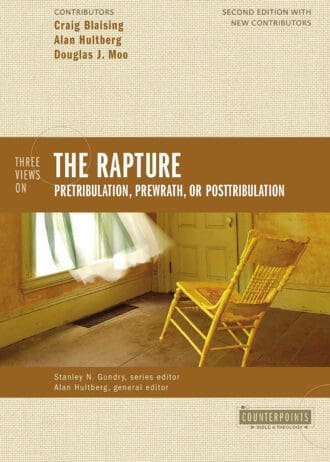
Three Views on the Rapture: Pretribulation, Prewrath, or Posttribulation

The rapture–or the belief that Jesus’ living followers will, at some point, join him forever while others do not–is an important but contested doctrine among evangelicals. Scholars generally hold one of three perspectives on the timing and circumstances of the rapture, all of which are presented in this important volume of the Counterpoints series, Three Views on the Rapture. Each author provides a substantive explanation of his position, which is critiqued by the other two authors. A thorough introduction gives a historical overview of the doctrine of the rapture and its effects on the church. The interactive and fair-minded format of the Counterpoints series allows readers to consider the strengths and weaknesses of each view and draw informed, personal conclusions.

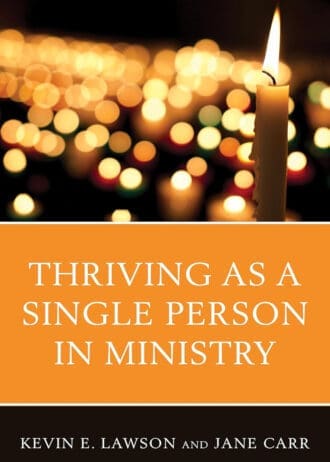
Thriving as a Single Person in Ministry

Churches large and small across the world and in every denomination have rising numbers of single people on their leadership staff. This book presents a research-based perspective on the joys, opportunities, and challenges of being single in vocational ministry. Through extensive interviews and focus groups, the authors present both a practical application and a positive message for those serving God as single clergy or pastoral leaders.

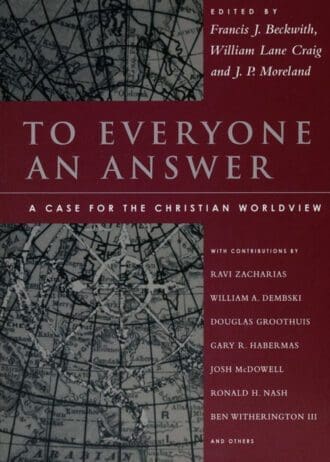
To Everyone an Answer: A Case for the Christian Worldview

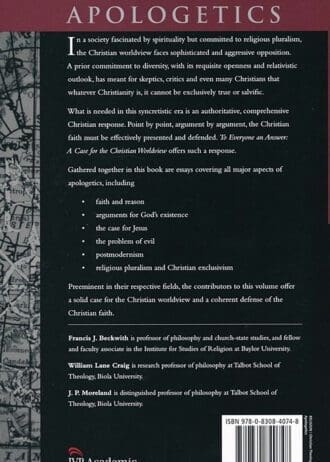
In a society fascinated by spirituality but committed to religious pluralism, the Christian worldview faces sophisticated and aggressive opposition. What is needed in this syncretistic era is an authoritative, comprehensive Christian response. Point by point, argument by argument, the Christian faith must be effectively presented and defended. To Everyone an Answer: A Case for the Christian Worldview offers such a response. Preeminent in their respective fields, the contributors to this volume offer a solid case for the Christian worldview and a coherent defense of the Christian faith.

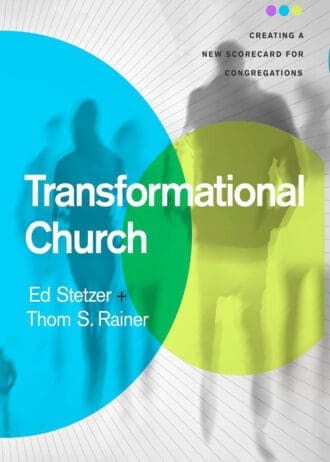
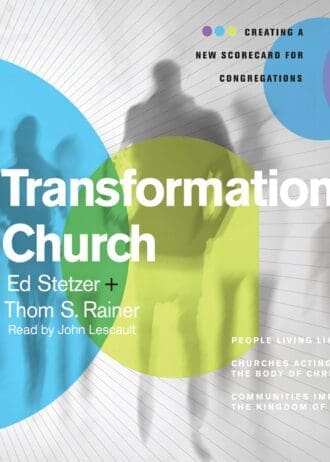
Transformational Church: Creating a New Scorecard for Congregations

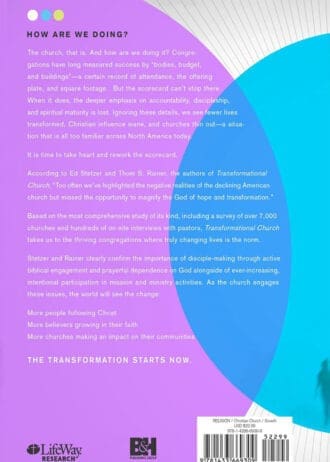
According to Ed Stetzer and Thom S. Rainer, the authors of Transformational Church, “Too often we’ve highlighted the negative realities of the declining American church but missed the opportunity to magnify the God of hope and transformation.” Based on the most comprehensive study of its kind, including a survey of more than 7,000 churches and hundreds of on-site interviews with pastors, Transformational Church takes us to the thriving congregations where truly changing lives is the norm. Stetzer and Rainer clearly confirm the importance of disciple making for all through active biblical engagement and prayerful dependence on God alongside of ever-increasing, intentional participation in mission and ministry activities.

Transformational Church: Creating a New Scorecard for Congregations – Audiobook

According to Ed Stetzer and Thom S. Rainer, the authors of Transformational Church, “Too often we’ve highlighted the negative realities of the declining American church but missed the opportunity to magnify the God of hope and transformation.” Based on the most comprehensive study of its kind, including a survey of more than 7,000 churches and hundreds of on-site interviews with pastors, Transformational Church takes us to the thriving congregations where truly changing lives is the norm. Stetzer and Rainer clearly confirm the importance of disciple making for all through active biblical engagement and prayerful dependence on God alongside of ever-increasing, intentional participation in mission and ministry activities.

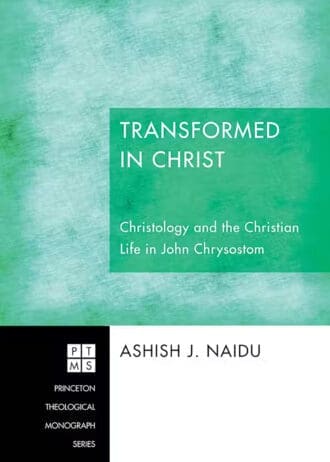
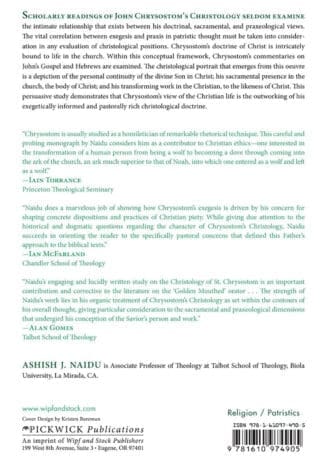
Transformed in Christ: Christology and the Christian Life in John Chrysostom

Scholarly readings of John Chrysostom’s Christology seldom examine the intimate relationship that exists between his doctrinal, sacramental, and praxeological views. The vital correlation between exegesis and praxis in patristic thought must be taken into consideration in any evaluation of christological positions. Chrysostom’s doctrine of Christ is intricately bound to life in the church. Within this conceptual framework, Chrysostom’s commentaries on John’s Gospel and Hebrews are examined. The christological portrait that emerges from this oeuvre is a depiction of the personal continuity of the divine Son in Christ; his sacramental presence in the church, the body of Christ; and his transforming work in the Christian, to the likeness of Christ.

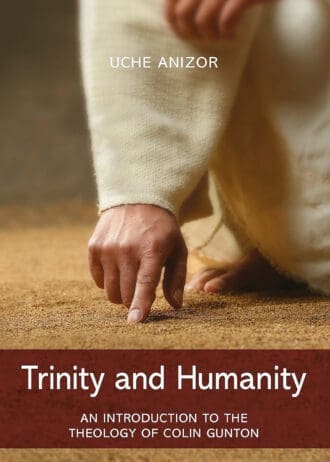
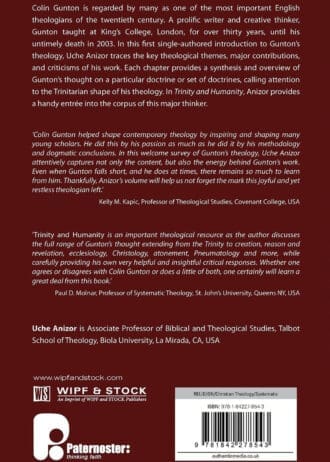
Trinity and Humanity: An Introduction to the Theology of Colin Gunton

Colin Gunton is regarded by many as one of the most important English theologians of the twentieth century. A prolific writer and creative thinker, Gunton taught at King’s College, London, for over thirty years, until his untimely death in 2003. In this first single-authored introduction to Gunton’s theology, Uche Anizor traces the key theological themes, major contributors, and criticisms of his work.

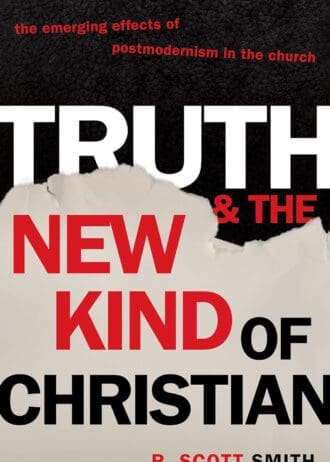
Truth and the New Kind of Christian: The Emerging Effects of Postmodernism in the Church

R. Scott Smith surveys the influence of postmodernism and presents the claims of several Christian postmodern authors, including two key leaders in the Emerging Church. He uses their ideas as a starting point for a thorough critique of postmodernism, testing it against Scripture, reason, and logic, and evaluating its strengths and weaknesses. He assesses to what extent, if any, Christians should embrace “Christian” postmodernism.

Understanding Biblical Theology: A Comparison of Theory and Practice

Understanding Biblical Theology provides an expert and clarifying look at the catch-all term “biblical theology,” a movement that tries to remove the often-held dichotomy between biblical studies for the Church and as an academic pursuit. Using a spectrum between history and theology, each of the five “types” of biblical theology are identified as landing somewhere on the continuum from “more theological” to “more historical” in concern and practice. Readers will gain an appreciation for each of these approaches and understand how any student of the Bible can learn from them.

1 26 27 28 29