Shop

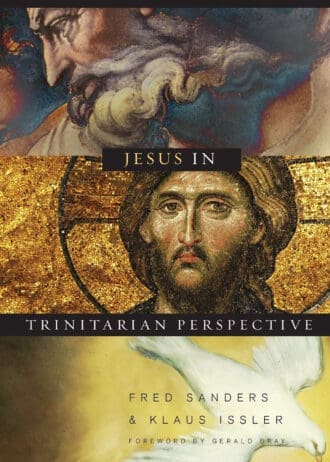
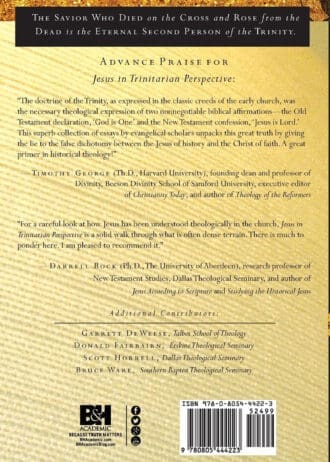
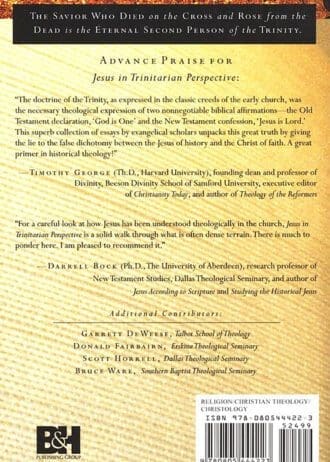
Jesus in Trinitarian Perspective: An Intermediate Christology

Jesus in Trinitarian Perspective features six highly respected scholars from schools such as Erskine Theological Seminary, Talbot School of Theology, Dallas Theological Seminary, and Southern Baptist Theological Seminary. These scholars address an issue that has a significant impact on the way Christians should approach everyday evangelism but is often ignored: the fundamental fact that the Savior who died on the cross and rose from the dead is the eternal second person of the Trinity. This introductory Christology book is written for advanced undergraduates and entry-level seminary students.
Jesus Under Fire: Modern Scholarship Reinvents the Historical Jesus

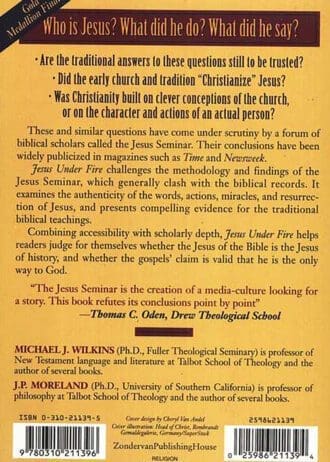
Jesus Under Fire challenges the methodology and findings of the Jesus Seminar, which generally clash with the biblical records. It examines the authenticity of the words, actions, miracles, and resurrection of Jesus, and presents compelling evidence for the traditional biblical teachings. Combining accessibility with scholarly depth, Jesus Under Fire helps readers judge for themselves whether the Jesus of the Bible is the Jesus of history, and whether the gospels’ claim is valid that he is the only way to God.

Joel, Amos, Obadiah: An Exegetical Commentary

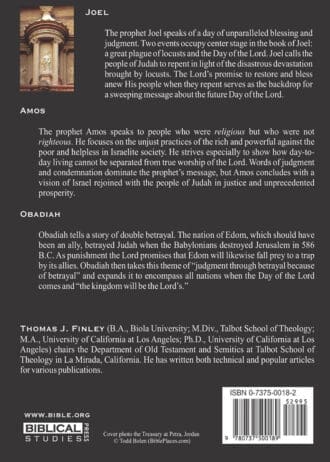
An excellent exegetical commentary.  The prophet Joel speaks of a day of unparalleled blessing and judgment. Two events occupy center stage in the book of Joel: a great plague of locusts and the Day of the Lord. Joel calls the people of Judah to repent in light of the disastrous devastation brought by locusts. The Lord’s promise to restore and bless anew His people when they repent serves as the backdrop for a sweeping message about the future Day of the Lord. The prophet Amos speaks to people who were religious but who were not righteous. He focuses on the unjust practices of the rich and powerful against the poor and helpless in Israelite society. He strives especially to show how day-to-day living cannot be separated from true worship of the Lord. Words of judgment and condemnation dominate the prophet’s message, but Amos concludes with a vision of Israel rejoined with the people of Judah in justice and unprecedented prosperity. Obadiah tells a story of double betrayal. The nation of Edom, which should have been an ally, betrayed Judah when the Babylonians destroyed Jerusalem in 586 B.C. As punishment the Lord promises that Edom will likewise fall prey to a trap by its allies. Obadiah then takes this theme of “judgment through betrayal because of betrayal” and expands it to encompass all nations when the Day of the Lord comes and “the kingdom will be the Lord’s.”

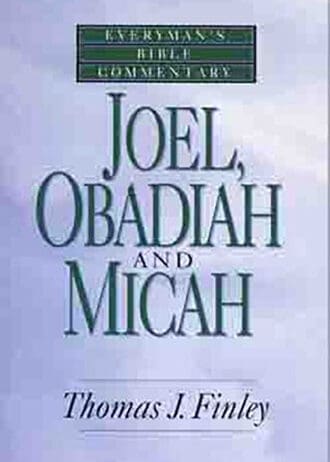
Joel, Obadiah and Micah – Bible Commentary (Everymans Bible Commentaries)

‘If the success of a man is measured by the impact he has on later generations, then all of the prophets were highly successful . . . They still speak as God’s mouthpieces to all people everywhere.’ Joel, Obadiah, and Micah preached to plugged ears and hearts of stone. Their message, however, was clear: God’s judgment is real. Studied extensively throughout the New Testament period until the present day, these books remain relevant to readers. Thomas J. Finley examines the short but important texts of these prophets in this thorough, verse-by-verse exploration. This volume contains each book’s historical setting, literary characteristics, a profile of the prophet, and the message for today.

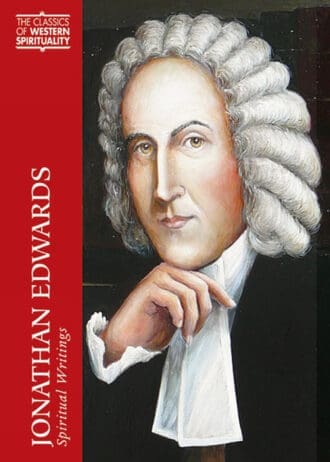
Jonathan Edwards (Classics of Western Spirituality)

Interest in Puritan theologian Jonathan Edwards has increased markedly over the last several decades. As more and more people become interested in Edwards as a theologian, exegete, and even political theorist, there is a major lacuna in both the primary and secondary literature. Edwards’s spirituality, a central facet of his life and work, remains unexplored. Jonathan Edwards: Spiritual Writings addresses this neglect by compiling material from across Edwards’s corpus that outlines the breadth of his spiritual thought. Drawing primarily from sermons, letters, and notes, this volume showcases Edwards’s spiritual theology.

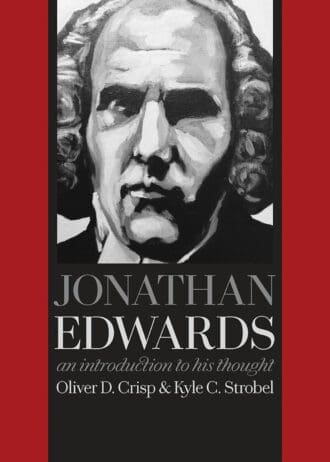
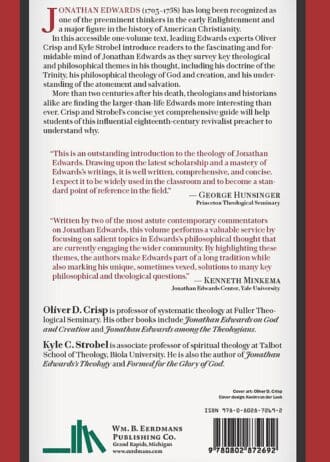
Jonathan Edwards: An Introduction to His Thought

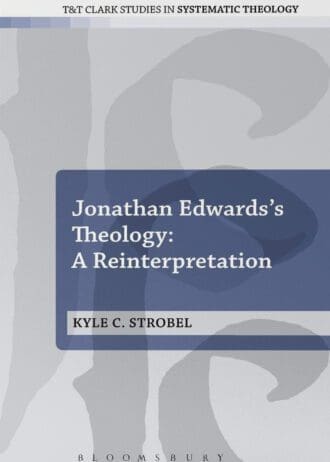
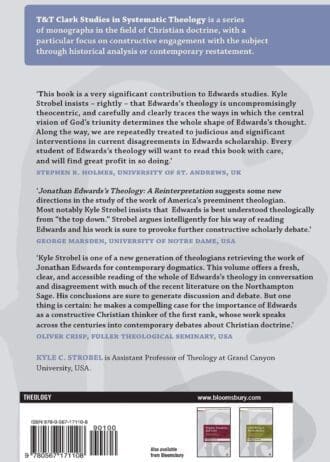
In this accessible one-volume text, leading Edwards experts Oliver Crisp and Kyle Strobel introduce readers to the fascinating and formidable mind of Jonathan Edwards as they survey key theological and philosophical themes in his thought, including his doctrine of the Trinity, his philosophical theology of God and creation, and his understanding of the atonement and salvation. More than two centuries after his death, theologians and historians alike are finding the larger-than-life Edwards more interesting than ever. Crisp and Strobel’s concise yet comprehensive guide will help students of this influential eighteenth-century revivalist preacher to understand why. Student-friendly intro to one of America’s most fascinating theological minds

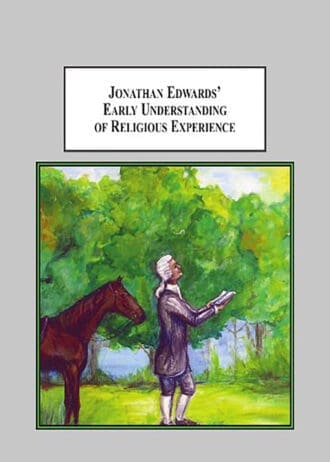
Jonathan Edwards’ Early Understanding of Religious Experience: His New York Sermons, 1720-1723

The significance of Scripture and piety had on Jonathan Edwards’ theology has often been obscured by his innovative use of secular though and reformed theology in his public writings. This study focuses on his earliest sermons and personal writings, which stand [prior to his study of Locke and use of the technical term sense of the heart. In looking at Edwards’ background, faith, and early sermons, this study presents an account of the emergence and expression of his early understanding of religious experience. True religion Edwards discovered, consists of the knowledge of God’s glory, love and grace made manifest by Jesus Christ and supernaturally imparted to the soul of mankind.

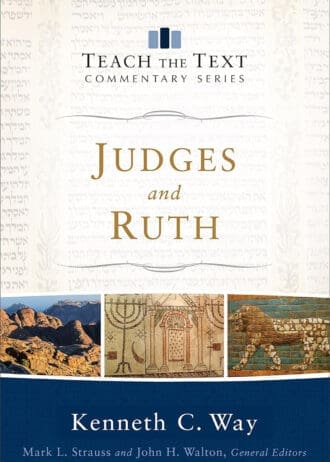
Judges and Ruth (Teach the Text Commentary Series)

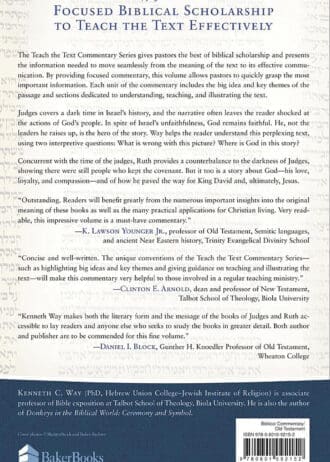
The Teach the Text Commentary Series utilizes the best of biblical scholarship to provide the information a pastor needs to communicate the text effectively. The carefully selected preaching units and focused commentary allow pastors to quickly grasp the big idea and key themes of each passage of Scripture. Each unit of the commentary includes the big idea and key themes of the passage and sections dedicated to understanding, teaching, and illustrating the text. The newest Old Testament release in this innovative commentary series is Kenneth C. Way’s treatment of Judges and Ruth.

Justice Awakening: How You and Your Church Can Help End Human Trafficking

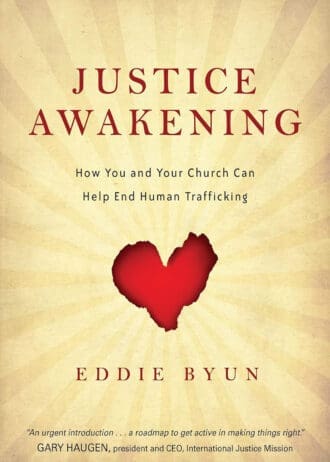
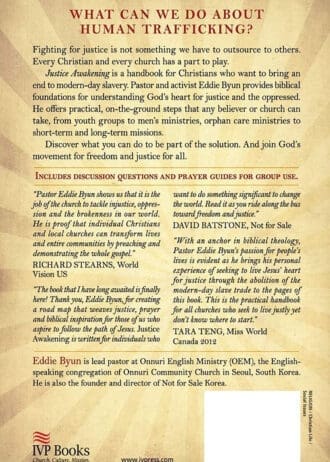
Justice Awakening is a handbook for Christians who want to bring an end to human trafficking and modern-day slavery. Pastor and activist Eddie Byun provides biblical foundations for understanding God’s heart for justice and the oppressed. He offers practical, on-the-ground steps that any believer or church can take, from youth groups to men’s ministries, orphan care ministries to short-term and long-term missions. Discover what you can do to be part of the solution. And join God’s movement for freedom and justice for all. Includes discussion questions and prayer guides for group use.

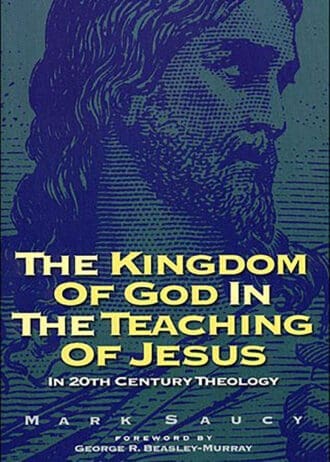
Kingdom of God and the Teaching of Jesus: In 20th Century Theology

Is the Kingdom already realized when people live in the Christian ethic, or does it await fulfillment in the Second Coming? In this penetrating analysis, Dr. Mark Saucy shows that how we answer such questions is far from being merely an academic issue. He holds that emphasizing the “already” or social aspect of the Kingdom over the “not yet” or apocalyptic aspect results in failed utopianism and devaluation of the Church as the contemporary expression of the Kingdom.

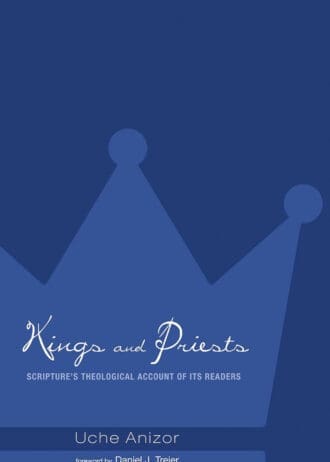
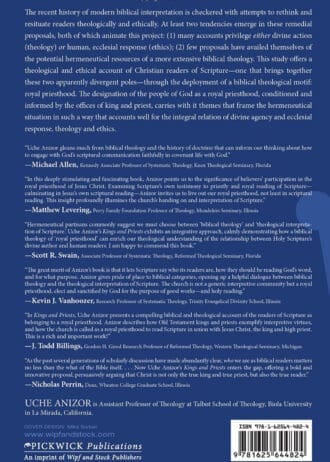
Kings and Priests

This study offers a theological and ethical account of Christian readers of Scripture-one that brings together these two apparently divergent poles-through the deployment of a biblical theological motif: royal priesthood. The designation of the people of God as a royal priesthood, conditioned and informed by the offices of king and priest, carries with it themes that frame the hermeneutical situation in such a way that accounts well for the integral relation of divine agency and ecclesial response, theology and ethics.

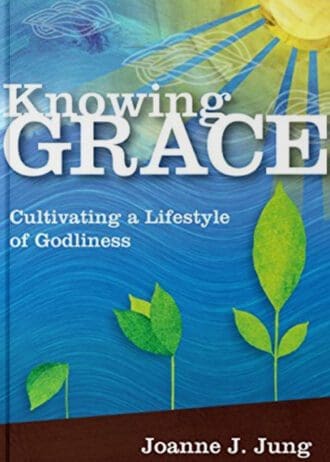
Knowing Grace: Cultivating a Lifestyle of Godliness

There are many fine written works describing the need, purpose, and methods of spiritual disciplines. Knowing Grace complements these by fostering and deepening the reader’s engagement with God through various means of grace. By using this terminology, “means of grace” a rightful emphasis is placed on God’s initiation, invitation, and empowering to engage with Him in ways that foster a greater sensitivity to His movements, stirrings, nudges and voice.

Knowledge for the Love of God: Why Your Heart Needs Your Mind

Knowledge for the Love of God is for followers of Jesus needing to better understand the crucial connection between faith and rationality. Timothy Pickavance shows how learning about who God is and what he has done, is doing, and will do draws us closer to him—just as in any relationship. With stories from his own experiences wrestling with this aspect of faith, Pickavance relates a compelling vision of how cultivating the intellect strengthens our Christian worldview, helps us gain freedom in Christ, and enables us to love God with our whole being. Discussion questions at the end of each chapter make this a book to be fruitfully shared among fellow believers desiring a deeper faith—one of heart, soul, strength, and mind.

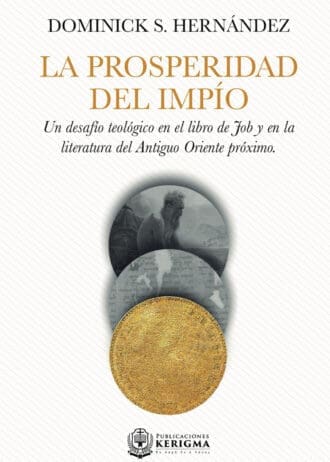
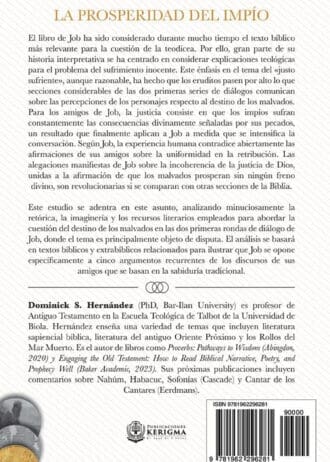
La Prosperidad del Impío (Spanish Edition)

El problema del mal, del sufrimiento de los inocentes, ha atormentado a los teólogos durante milenios. Sin embargo, la prosperidad de los malvados, aunque menos destacada, causaba gran angustia a figuras bíblicas como Jeremías, y es un tema importante en los diálogos entre Job y sus compañeros. El profesor Hernández ofrece un tratamiento exhaustivo de este tema, haciendo un uso experto de la filología, el análisis literario y temático, y la comparación con textos del antiguo Oriente Próximo. Este libro debería convertirse en un estándar, de interés para los estudiantes de la Biblia en general y de Job en particular.

Leadership in Theological Education, Volume 1: Foundations for Academic Leadership

This publication is the first of three volumes intended to accompany and support the IPAL seminars as well as independently providing wider access to the principles required by academic leaders for institutional development. Each chapter shares and illustrates the contributors’ expertise in and understanding of education, leadership and administration in the field of evangelical academic institutions. With an intentional awareness of a wide range of non-Western contexts this volume is a much-needed guide for senior administrators around the world.

Leadership in Theological Education, Volume 2: Foundations for Curriculum Design

This publication is the second of three volumes intended to accompany and support the IPAL seminars as well as independently providing wider access to the principles required by academic leaders for institutional and curriculum development. Each chapter shares and illustrates the expertise and understanding the contributors have of education and curriculum design in the field of evangelical academic institutions. With an intentional awareness of a wide range of non-Western contexts, this volume is a much-needed guide for course administrators around the world.

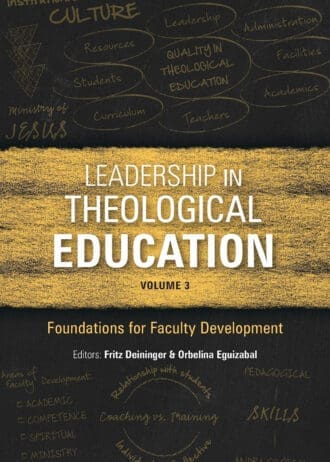
Leadership in Theological Education, Volume 3: Foundations for Faculty Development

This publication is the third and final volume intended to accompany and support the IPAL seminars as well as be an independent resource to aid theological institutions with faculty development. Faculty development is at the heart of theological education. This book lays the foundation for institutions to equip, train and release emerging academic leaders to advance their careers and improve the standards of their teaching and research. The contributors to this volume share the findings of research conducted at evangelical academic institutions in various contexts around the world so other senior administrators can enhance the quality of theological education at their own institution.

1 12 13 14 29