Theology

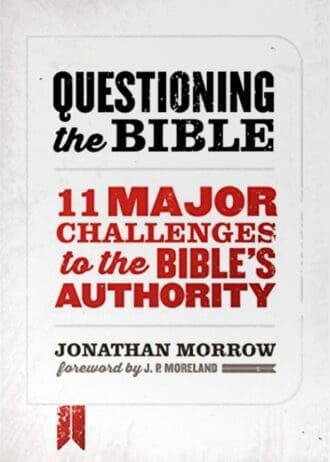
Questioning the Bible: 11 Major Challenges to the Bible’s Authority

Can a thoughtful person today seriously believe that God wrote a book? There are an unprecedented number of sophisticated attacks on the origin, credibility, and reliability of the Bible. It can be difficult to know what to say when skepticism and secularism take over so many conversations. The purpose of this book is to respond to these challenges, sound bites, and slogans…and give people confidence that the Bible can be trusted and that it matters for our lives because God really has spoken.
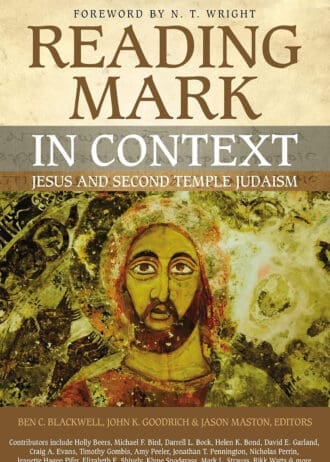
Reading Mark in Context: Jesus and Second Temple Judaism

Over the last several decades, the Jewishness of Jesus has been at the forefront of scholarship and students of the New Testament are more than ever aware of the importance of understanding Jesus and the Gospels in their Jewish context. Reading Mark in Context helps students see the contour and texture of Jesus’ engagement with his Jewish environment. It brings together a series of accessible essays that compare and contrast viewpoints, theologies, and hermeneutical practices of Mark and his various Jewish contemporaries.

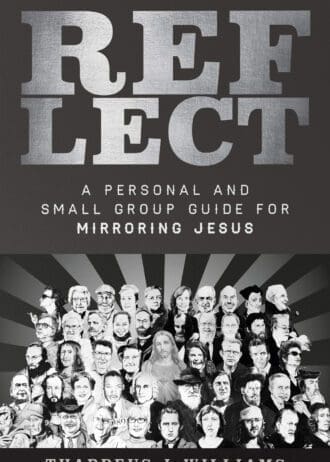
REFLECT: A Personal and Small Group Guide for Mirroring Jesus

REFLECT: A Personal and Small Group Guide for Mirroring Jesus is the personal and small-group study companion to REFLECT: Becoming Yourself by Mirroring the Greatest Person in History by Thaddeus J. Williams. Drawing on science, literature, art, theology, history, music, philosophy, pop culture, and more, REFLECT paints a fresh and inspiring vision of how we become most truly ourselves by mirroring Jesus Christ.

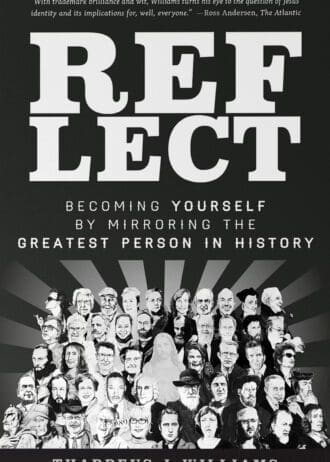
REFLECT: Becoming Yourself by Mirroring the Greatest Person in History

What’s the most important thing in the universe to you? What, more than anything else, permeates your thought life, pulls your heart strings, and propels your actions? Don’t fool yourself. That supreme something—whatever it may be for you—is shaping the person you are becoming, for better or for worse, turning you into someone radiant and full of life, or making you a dim and weightless ghost of yourself.   But what if we worshiped Jesus? Drawing from science, literature, art, theology, history, music, philosophy, pop culture, and more, Thaddeus J. Williams paints a fresh and inspiring vision of how we become most truly ourselves by mirroring the Greatest Person in History. See full description below.

REFLECT: Becoming Yourself by Mirroring the Greatest Person in History – Audiobook

What’s the most important thing in the universe to you? What, more than anything else, permeates your thought life, pulls your heart strings, and propels your actions? Don’t fool yourself. That supreme something—whatever it may be for you—is shaping the person you are becoming, for better or for worse, turning you into someone radiant and full of life, or making you a dim and weightless ghost of yourself.   But what if we worshiped Jesus? Drawing from science, literature, art, theology, history, music, philosophy, pop culture, and more, Thaddeus J. Williams paints a fresh and inspiring vision of how we become most truly ourselves by mirroring the Greatest Person in History. See full description below.

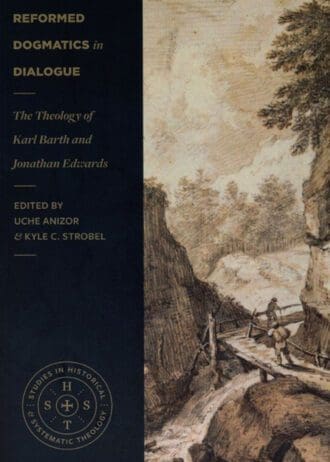
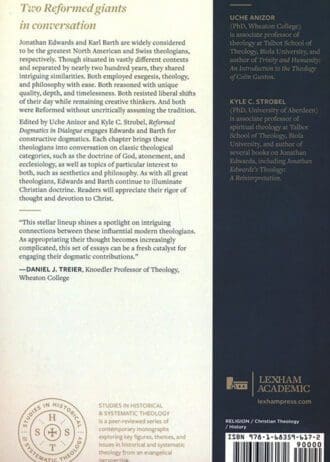
Reformed Dogmatics in Dialogue: The Theology of Karl Barth and Jonathan Edwards

Two Reformed giants in conversation. Edited by Uche Anizor and Kyle C. Strobel, Reformed Dogmatics in Dialogue engages Edwards and Barth for constructive dogmatics. Each chapter brings these theologians into conversation on classic theological categories, such as the doctrine of God, atonement, and ecclesiology, as well as topics of particular interest to both, such as aesthetics and philosophy.

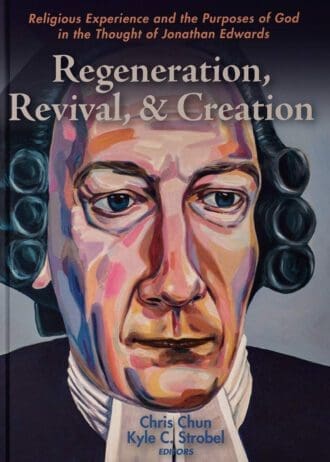
Regeneration, Revival, and Creation

Jonathan Edwards (1703-58) is considered one of the greatest theologians and philosophers of evangelicalism, who also served as a pastor, missionary, and revival leader. By underscoring Regeneration, Revival, and Creation in Edwards’s thought, this volume uniquely captures the need to delve into Edwards’s theological and philosophical rationale for the revivals, alongside key questions concerning the historical context and Edwards’s standing in his own tradition.

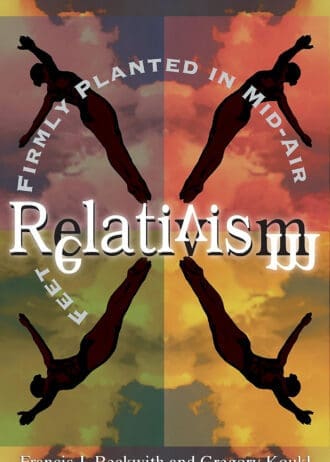
Relativism: Feet Firmly Planted in Mid-Air

Writing from years of experience in defending Christian values, Francis J. Beckwith and Gregory Koukl offer a critique of moral relativism. They explore the inherent inconsistencies in the relativist position, suggest specific approaches that can be used in the course of dialogue, and consider the everyday implications of relativism, especially in relation to important issues such as abortion, homosexuality, multiculturalism, political correctness, and tolerance.

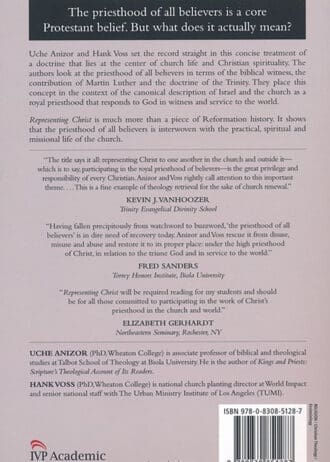
Representing Christ: A Vision for the Priesthood of All Believers

The priesthood of all believers is a core Protestant belief. But what does it actually mean? Uche Anizor and Hank Voss set the record straight in this concise treatment of a doctrine that lies at the center of church life and Christian spirituality. The authors look at the priesthood of all believers in terms of the biblical witness, the contribution of Martin Luther and the doctrine of the Trinity. They place this concept in the context of the canonical description of Israel and the church as a royal priesthood that responds to God in witness and service to the world. Representing Christ is much more than a piece of Reformation history. It shows that the priesthood of all believers is interwoven with the practical, spiritual and missional life of the church.

Restoring the Foundations of Epistemic Justification: A Direct Realist and Conceptualist Theory of Foundationalism

Foundationalism, as a theory of justification and knowledge, is often associated with Enlightenment rationality, the Cartesian thirst for certainty, and the modern assumption of the objectivity and universality of reason. Because of these associations, scholars in various fields have disdained foundationalism in favor of some sort of non-foundationalist/post-modern approach to knowledge and justification. This present book is one piece of a much wider conversation that hopes to motivate a renewed look at foundationalism. Of course, the foundationalism on offer has settled down quite a bit from its surly forbears. This more mild-mannered foundationalism suggests that our beliefs about reality can be held with confidence and yet these beliefs remain open to criticism and revision. It is this type of epistemology that provides a constructive basis for investigation and research while nevertheless encouraging a cognitive humility about our claims to possess truth.

Retrieving Eternal Generation

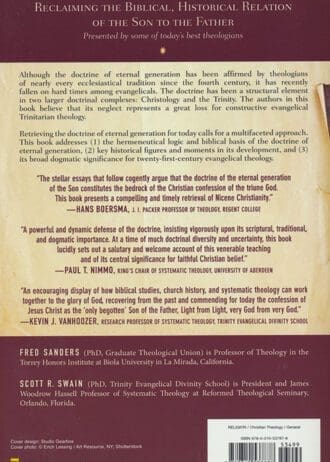
Retrieving the doctrine of eternal generation for contemporary evangelical theology calls for a multifaceted approach. Retrieving Eternal Generation addresses (1) the hermeneutical logic and biblical bases of the doctrine of eternal generation; (2) key historical figures and moments in the development of the doctrine of eternal generation; and (3) the broad dogmatic significance of the doctrine of eternal generation for theology. This book addresses both the common modern objections to the doctrine of eternal generation and presents the productive import of the doctrine for twenty-first century evangelical theology.

Righteous Indignation: Christian Philosophical and Theological Perspectives on Anger

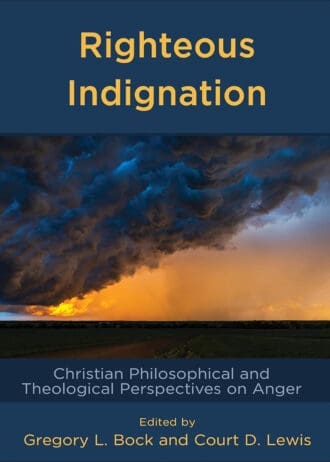
Righteous Indignation: Christian Philosophical and Theological Perspectives on Anger explores the philosophy of Christian anger—what anger is, what it means for God to be angry, and when anger is morally appropriate. The book explores specific biblical questions, such as how God communicates his anger in the Old Testament and whether anger at one’s enemies in the imprecatory psalms is praiseworthy. In addition, some chapters focus on the practical application of anger to topics such as racial justice, criminal law, and civil discourse, and on the ideas of historical figures such as Thomas Aquinas and Jonathan Edwards. The purpose of the book is to provide multiple perspectives, examining anger from different angles, but most of all it is hoped that readers will come away with a better understanding of God’s nature and how followers of Jesus ought to relate to those who wrong them.

Biola University Contributor:
Charlie Trimm – “Praying Against Enemies: Biblical Precedents, Ethical Reflections, and Suggested Guidelines”

Sanctified by Grace: A Theology of the Christian Life

Books on the Christian life abound. Some focus on spirituality, others on practices, and others still on doctrines such as justification or forgiveness. Few offer an account of the Christian life that portrays redeemed Christian existence within the multifaceted and beautiful whole of the Christian confession. This book attempts to fill that gap. It provides a constructive, specifically theological interpretation of the Christian life according to the nature of God’s grace. Drawing together some of the most important theologians in the church today, Sanctified by Grace achieves what no other theological text offers – a shared work of dogmatic theology oriented to redeemed Christian existence.

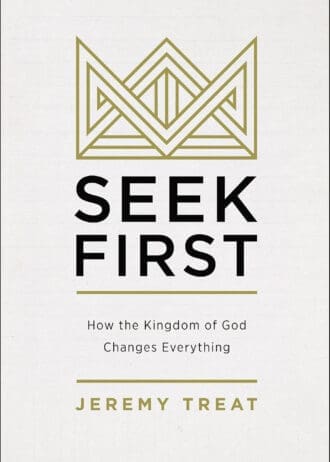
Seek First: How the Kingdom of God Changes Everything

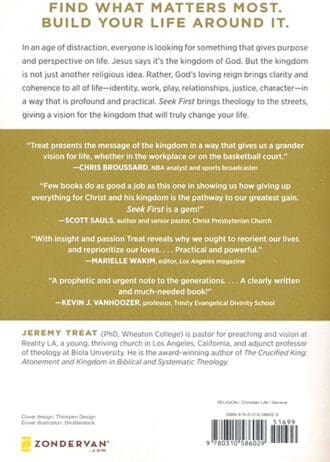
In an age of distraction, everyone is looking for something that gives purpose and perspective on life. Jesus says it’s the kingdom of God. But the kingdom is not just another religious idea. Rather, God’s loving reign brings clarity and coherence to all of life – identity, work, play, relationships, justice, and character – in a way that is profound and practical. Seek First brings theology to the streets, giving a vision for the kingdom that will truly change your life.

Seek First: How the Kingdom of God Changes Everything – Audiobook

In an age of distraction, everyone is looking for something that gives purpose and perspective on life. Jesus says it’s the kingdom of God. But the kingdom is not just another religious idea. Rather, God’s loving reign brings clarity and coherence to all of life – identity, work, play, relationships, justice, and character – in a way that is profound and practical. Seek First brings theology to the streets, giving a vision for the kingdom that will truly change your life.

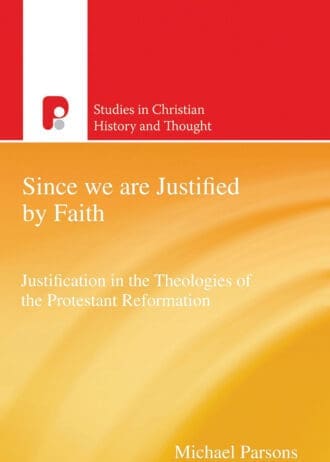
Since we are Justified by Faith: Justification in the Theologies of the Protestant Reformation

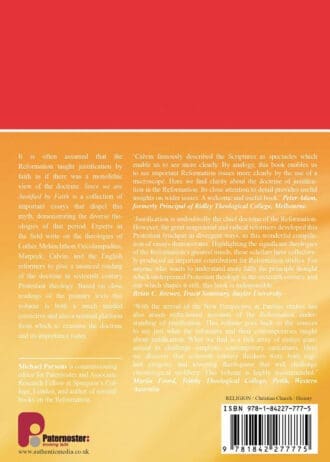
It is often assumed that the Reformation taught justification by faith as if there was a monolithic view of the doctrine. Since We Are Justified By Faith is a collection of important essays that dispel this myth, demonstrating the diverse theologies of that period. Experts in the field, including Cameron MacKenzie, Aaron OKelly, Jeff Fisher, Kirk MacGregor, Mary Patton Baker, Karin Spiecker Stetina, David Hall, Bonnie Pattison, Timothy Shaun Price, Andre Gazal, and Chris Ross, write on the theologies of Luther, Melanchthon, Oecolampadius, Marpeck, Calvin, and the English reformers to give a nuanced reading of the doctrine in sixteenth-century Protestant theology.

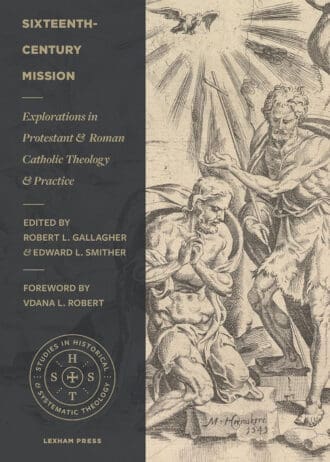
Sixteenth-Century Mission: Explorations in Protestant and Roman Catholic Theology and Practice

In Sixteenth-Century Mission, a diverse cast of contributors explores the wide-reaching practice and theology of mission during this era. Rather than a century bereft of cross-cultural outreach, we find both Reformers and Roman Catholics preaching the gospel and establishing the church in all the world. This overlooked yet rich history reveals themes and insights relevant to the practice of mission today.

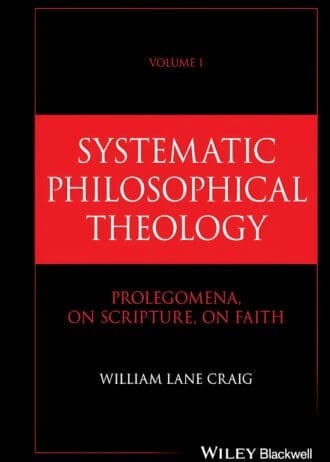
Systematic Philosophical Theology, Volume 1

William Lane Craig’s Systematic Philosophical Theology is a multi-volume explication of Christian doctrine in the classic Protestant tradition of the loci communes as seen through the lens of contemporary analytic philosophy. Uniquely blending the disciplines of biblical theology, historical theology, and analytic theology, these volumes aim to provide readers with a biblical and philosophically coherent articulation of a wide range of Christian doctrines. In the first volume of the series, Prolegomena, On Scripture, On Faith, Craig begins by introducing his conception of systematic philosophical theology, describing how it relates to biblical theology, dogmatics, fundamental theology, apologetics, and especially philosophy of religion. The chapters that follow defend the divine authority of Scripture, address the nature of faith, and discuss the rational justification for Christian faith. Throughout the text, Craig tackles cutting edge philosophical questions that arise naturally from Christian doctrine, such as the compatibility of biblical inspiration and human freedom and whether faith implies belief.

1 4 5 6 8