Church Growth

Biblical Church Growth: How You Can Work with God to Build a Faithful Church

Every pastor wants to have a vibrant, dynamic church. There are many popular models for church growth based on outstanding churches led by outstanding pastors. But unfortunately, specific models are temporary and go out of style quickly. Author Gary McIntosh explores the biblical principles for church growth and applies them to today’s culture. Instead of concentrating on the ephemeral how of church growth, he focuses on the unchanging why. Using personal stories and current statistics as well as numerous biblical examples, the author sets forth ten basic principles that provide an eternal foundation for helping any church-large or small-achieve lasting vitality and growth.
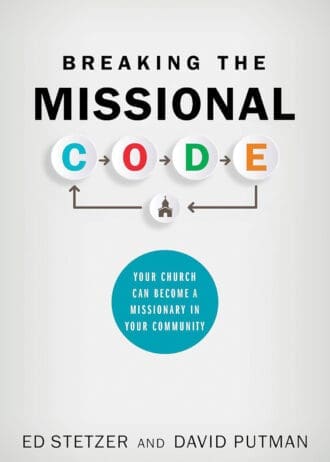
Breaking the Missional Code: Your Church Can Become a Missionary in Your Community

Across North America, many pastors are excited to see churches growing as they achieve their mission to connect the message of the gospel with the community at large. Still others are equally frustrated, following the exact same model for outreach but with lesser results. Indeed, just because a “missional breakthrough” occurs in one place doesn’t mean it will happen the same way elsewhere. One size does not fit all, but there are cultural codes that must be broken for all churches to grow and remain effective in their specific mission context. Breaking the Missional Code provides expert insight on church culture and church vision casting, plus case studies of successful missional churches impacting their communities.

Christians at Our Best: A Six-Week Guide to Living in the Age of Outrage

Today there are too many examples of those claiming to follow Christ being caustic, divisive, and irrational, contributing to dismissals of the Christian faith as hypocritical, self-interested, and politically co-opted. What has happened in our society? It seems one short outrageous video or pithy post can trigger an avalanche of comments on social media. In this guide, Ed Stetzer―respected columnist and popular Bible teacher―leads small groups through a deep conversation of what it would look like if Christians were at their best. How might our world and our communities be different? Spend the next six weeks discussing what it means to represent the love of Jesus Christ in this new polarized age. This discussion guide for small groups is designed to be used with the teaching videos featuring Ed Stetzer.

Christians in the Age of Outrage: How to Bring Our Best When the World Is at Its Worst

Today there are too many examples of those claiming to follow Christ being caustic, divisive, and irrational, contributing to dismissals of the Christian faith as hypocritical, self-interested, and politically co-opted. What has happened in our society? One short outrageous video, whether it is true or not, can trigger an avalanche of comments on social media. In this groundbreaking book featuring new survey research of evangelicals and their relationship to the age of outrage, Ed Stetzer offers a constructive way forward. You won’t want to miss Ed’s insightful analysis of our chaotic age, his commonsensical understanding of the cultural currents, and his compelling challenge to Christians to live in a refreshingly different way.

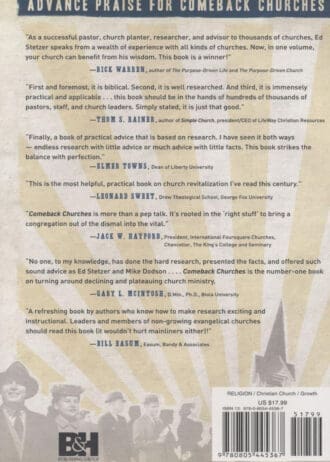
Comeback Churches: How 300 Churches Turned Around and Yours Can, Too

Research shows that over time, most churches plateau and then eventually decline. Typically, they start strong and experience periods of growth, then stagnate and lose members. Since 1991, the North American population has increased by 15 percent while the number of “unchurched” people has increased by 92 percent. Large church houses that were filled in the 1950s and `60s now hold a fraction of their capacity.To counter this trend, authors Ed Stetzer and Mike Dodson surveyed 300 churches from across ten different denominations that recently achieved healthy evangelistic growth after a significant season of decline. What they have discovered is an exciting method of congregation reinvigoration that is shared in the new book entitled Comeback Churches.

Compelled by Love: The Most Excellent Way to Missional Living

Understand what it means to be compelled by love. In the book entitled Compelled by Love, trusted missiologist Ed Stetzer and coauthor and pastor Philip Nation challenge readers to look at love within the context of God, the church, and the lives of individual believers. Selected as the 2008–2009 emphasis book for WMU®, a million-member nonprofit missions organization, Compelled by Love will give readers a basic theological grounding and a platform for personal application as they understand what missional living is all about—it is simply the calling to love others. Look at the love of God; begin to truly understand what is at the center of the church’s foundation, commission, and direction; but most importantly, understand your role within the mission of God as you integrate love into all aspects of your missional calling.

Donald A. McGavran: A Biography of the Twentieth Centurys Premier Missiologist

Meet the man who sparked the entire modern church growth movement. In this first full biography of Donald A. McGavran, Gary L. McIntosh tells the complete story of one of the twentieth century’s greatest church leaders and influential thinkers. Now, for the first time, discover the roots of the modern Church Growth Movement during the 1950s to understand what is applicable to ministry today.

Evaluating the Church Growth Movement: 5 Views

What exactly is the Church Growth movement? This timely volume in the Counterpoints series addresses the history of the movement that has become such an enormous shaping force on the Western church today, and it explores–in a roundtable forum of leading voices–five main perspectives on the classic Church Growth movement. Each view is first presented by its proponent, then critiqued by the co-contributors. The interactive and fair-minded format allows the reader to consider the strengths and weaknesses of each view and draw informed, personal conclusions. Evaluating the Church Growth Movement concludes with reflections by three seasoned pastors who have grappled with the practical implications of Church Growth.

Finding Them, Keeping Them: Effective Strategies for Evangelism and Assimilation in the Local Church

This book is an excellent step to help laypeople understand the science of church growth and apply it to their local church. McIntosh and Martin have taken the traditional concepts of church growth and written them so the average layperson can understand them…For many years church growth has been in the hands of scholars and pastors. This book attempts to help laypeople and church leaders understand the terms and apply them to their church.

Finish the Mission: Bringing the Gospel to the Unreached and Unengaged

This is no ordinary missions book. The theme isn’t new, but the approach is refreshing and compelling, as contributors David Platt, Louie Giglio, Michael Ramsden, Ed Stetzer, Michael Oh, David Mathis, and John Piper take up the mantle of the Great Commission and its Spirit-powered completion. From astronomy to exegesis, from apologetics to the Global South, from being missional at home to employing our resources in the global cause, Finish the Mission aims to breathe fresh missionary fire into a new generation, as together we seek to reach the unreached and engage the unengaged.

Growing God’s Church: How People Are Actually Coming to Faith Today

It’s no secret that the evangelism methods of yesterday are not yielding the kinds of results they did in the 1970s and 1980s. So how are new Christians hearing the Gospel today? How are they finding churches? And what makes them stay at a church? The answers to these questions have the power to dramatically alter the way we do outreach. And Dr. McIntosh has them. Based on ten years of scientific research, Growing God’s Church shows pastors and church leaders how people are actually coming to faith in the 21st century. It covers factors such as our motive for ministry, the priorities churches set for themselves, the reality of churchless Christians, generational and gender-based differences in evangelism effectiveness, the name of your church, the influence of pastors, and much more. The appendix includes a copy of the survey that provides the basis for McIntosh’s arguments and an overview of the study is provided in the first chapter.

Lost and Found: The Younger Unchurched and the Churches that Reach Them

In a poll result highlighted by CNN Headline News and USA Today, nearly half of nonchurchgoers between the ages of twenty and twenty-nine agreed with the statement, “Christians get on my nerves.” Now, researchers behind the larger study present Lost and Found, a blend of dynamic hard data and modern day parable that tells the real story of an unchurched generation that is actually quite spiritual and yet circumspect, open to Jesus but not the church. As such, Lost and Found is written to the church, using often-surprising results from the copious research here to strike another nerve and break some long established assumptions about how to effectively engage the lost. Leading missiologist Ed Stetzer and his associates first offer a detailed investigation of the four younger unchurched types. With a better understanding of their unique experiences, they next clarify the importance each type places on community, depth of content, social responsibility, and making cross-generational connections in relation to spiritual matters.

One Size Doesn’t Fit All: Bringing Out the Best in Any Size Church

Framed as a discussion between a pastor six months out of seminary and a veteran pastor, this book tackles the issues of how churches grow and how church size determines effective strategy for ministry. The pastors’ Saturday morning dialogues reveal ten areas that will help readers understand their own church’s psychology. This is a vital resource for any new pastor, church planter, or lay leader concerned about his or her local church. Each chapter concludes with a Taking It Home segment.

Planting New Churches in a Postmodern Age

Len Sweet talks about Planting New Churches in a Postmodern Age as that one-stop, one-shop wonder that makes obsolete all the alternatives. In this book, Ed Stetzer lays out a case for missional church planting and then describes the process to plant healthy new churches. He combines the theological and the practical in one book. The book looks at cultures and how to reach persons in those cultures through the tools within the cultures themselves. It also provides a new look at emerging trends in churches reaching postmoderns. Then, it provides step by step instructions about how to plant churches in today’s world. Solid experience (from Stetzer and dozens of examples), Biblical roots, and fresh insights into the postmodern world make this a must read for the church planting hoping to make an impact.

Staff Your Church for Growth: Building Team Ministry in the 21st Century

Why, when, and how should a church add to its professional staff? Staff Your Church for Growth: Building Team Ministry in the 21st Century is a practical manual dealing with the issues of hiring and utilizing multiple staff positions to encourage church growth. Current data show that half of all churches have some form of multiple staff, and many others are considering the addition of professional staff in the future. Gary L. McIntosh has written a comprehensive manual for the twenty-first-century church, focusing on how, why, who, and when to add staff in a way that encourages growth.

Taking Your Church to the Next Level: What Got You Here Won’t Get You There

All local churches experience a predictable life cycle of growth and decline. But if a church is on a downward trend, how can it turn around? Taking Your Church to the Next Level explains the impact of age and size on churches and outlines the improvements that must be made at each point for a church to remain fruitful and faithful to its mission. McIntosh deftly describes the cycles of fruitfulness and the importance of continual improvement to diminish destructive forces that keep a congregation from its mission. Church leaders, pastors, and all who care about the church and desire to see it experience biblical growth will benefit from the sage wisdom offered in these pages.

There’s Hope for Your Church: First Steps to Restoring Health and Growth

A startling 85% of churches in the US are plateaued or declining, a trend that has been building for the past fifty years. In the face of shrinking attendance and lagging spiritual growth, pastors and church leaders are understandably discouraged and demoralized. But the first step to turning things around is hope. Church health expert Gary McIntosh offers this hope by showing church leaders the first things they need to do to make a new start for their church. God can and does restore churches to new life, even as he restores individuals. The street-smart ideas and step-by-step instructions found in this book are ones that pastors and church leaders can put to use immediately in their churches to bring about solid growth and renewed hope for the future.

Transformational Church: Creating a New Scorecard for Congregations

According to Ed Stetzer and Thom S. Rainer, the authors of Transformational Church, “Too often we’ve highlighted the negative realities of the declining American church but missed the opportunity to magnify the God of hope and transformation.” Based on the most comprehensive study of its kind, including a survey of more than 7,000 churches and hundreds of on-site interviews with pastors, Transformational Church takes us to the thriving congregations where truly changing lives is the norm. Stetzer and Rainer clearly confirm the importance of disciple making for all through active biblical engagement and prayerful dependence on God alongside of ever-increasing, intentional participation in mission and ministry activities.

Viral Churches: Helping Church Planters Become Movement Makers

A groundbreaking guide for multiplying the impact of church plants

Based on a study that was commissioned by the Leadership Network, this book reveals the best practices in church planting and uncovers the common threads among them. A much-needed resource, this book will inform, guide, and even catalyze today’s many church planting leaders. The authors clearly show leaders how to plant churches that create a multiplication movement and offer inspiration for them to do so. The book addresses their questions about what to do next in their church planting strategies, in light of research on what’s actually working best. Offers a definitive guide for church planting and the burgeoning movement it is part of.